Pai Gow Poker: How to Play, Rules and Strategy
PlayPaiGowPoker.net is a complete guide to Pai Gow Poker, the slow-paced casino table game where you split seven cards into two hands. Start here with the basics of how a round works.
Once you know the flow of the game, go deeper with the Pai Gow hand rankings, house way and strategy, odds and commission, the history of Pai Gow and other table poker games.
Pai Gow poker is a relaxed casino table game based on traditional poker hands. Instead of one hand, you make two: a five-card hand and a two-card hand. Because many rounds end in a tie, the game moves at a calm pace. This page explains the rules step by step.
The deck and the joker
Pai Gow poker is played with a standard 52-card deck plus one joker. The joker is partly wild: it can be used as an ace, or to complete a straight, a flush or a straight flush.
The deal
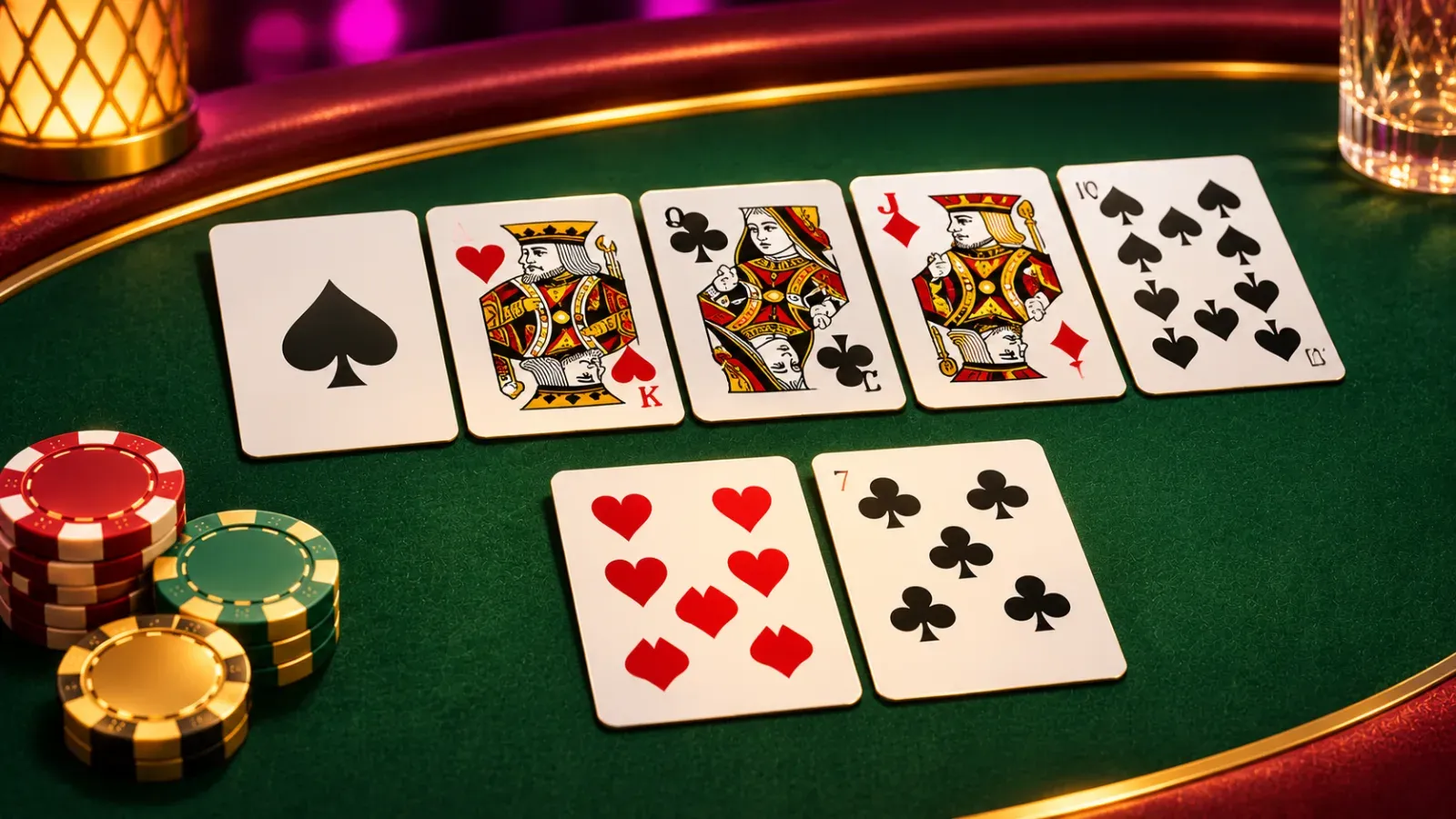
Each player and the dealer receive seven cards. You then split your seven cards into two hands:
- High hand: five cards, sometimes called the back hand.
- Low hand: two cards, sometimes called the front hand.
The five-card hand must always be stronger than the two-card hand. If you set them the wrong way round, your hand is fouled, which usually means you lose. The dealer will normally point this out at a live table.
How hands are compared
When everyone has set their hands, the dealer sets theirs according to a fixed method called the house way. Then both of your hands are compared with the dealer's:
- Win both hands: you win your bet, minus a commission.
- Win one, lose one: it is a push and your bet is returned.
- Lose both hands: you lose your bet.
If one of your hands is exactly equal to the dealer's, the dealer wins that hand. This is called a copy.
Why pushes are common
Because you need to win both hands to win the bet, a large share of rounds end in a push. That makes Pai Gow poker one of the slowest-paced casino games, which many players enjoy.
Hand rankings
The five-card hand uses normal poker rankings, while the two-card hand can only be a pair or a high card. Details are on our page about Pai Gow hand rankings.
Setting your hands
Most of the skill lies in how you split your seven cards. Learn the principles in house way and strategy.
Commission
Winning bets usually pay even money minus a 5 percent commission. Read more in odds, house edge and commission. Play responsibly and only if you are 18 or older.
A full round, start to finish
Each player places a stake, after which the dealer deals seven stacks of seven cards. A dice roll or a random number decides who receives which stack, so nobody can predict the order. You then split your seven cards into a five-card high hand and a two-card low hand, keeping one rule in mind: the high hand must always rank higher than the low hand. Once all players have set their hands, the dealer reveals the banker's cards and sets them according to the house way. Each of your hands is then compared with the matching banker hand.
The two-hand rule in practice
Suppose you hold a pair of kings, a pair of fives, an ace, a nine and a four. You could keep both pairs in the five-card hand and play the ace and nine as your low hand. Or you could split the pairs, putting the kings in the high hand and the fives in the low hand. Which choice is better depends on the strength of your cards, and the guidelines in house way and strategy explain how most players approach it. What you can never do is make the two-card hand stronger than the five-card hand; that is a foul and usually costs the bet.
Copies and ties
When one of your hands exactly matches the banker's corresponding hand, it is called a copy. Copies go to the banker, which is one of the sources of the house edge. This is why setting a strong low hand matters: it reduces the chance of ending up with an identical two-card hand. Full details on what each outcome pays are in pai gow odds and commission.
Who is pai gow poker for?
The game suits players who enjoy a relaxed pace and a bit of thinking without high pressure. Many hands end in a push, so your stake tends to last longer than in faster games. If you are new, pai gow poker rules for beginners gives a gentle introduction, and common mistakes in pai gow poker helps you avoid the errors most newcomers make.
Playing at your own pace
Pai gow poker is one of the slowest table games in the casino, with fewer hands per hour than blackjack or roulette. Combined with the frequent pushes, that makes it a good choice when you want a long, relaxed session on a modest budget. Explore hand rankings next to make every decision with confidence.
Frequently asked questions
How many cards do you get in Pai Gow poker?
Seven cards, which you split into a five-card hand and a two-card hand.
What happens if my two hands tie with the dealer?
If a hand is exactly equal to the dealer's, the dealer wins that hand. This is called a copy.
What does fouling a hand mean?
Setting your two-card hand stronger than your five-card hand. A fouled hand usually loses.