Common Pai Gow Poker Mistakes and How to Avoid Them
Common Pai Gow Poker Mistakes and How to Avoid Them
Pai Gow Poker mistakes often happen before a player ever compares a hand with the dealer. The main challenge is arranging seven cards into two poker hands that follow the table's rules: a five-card back hand and a two-card front hand. A hurried split, an unchecked rule or an impulsive side bet can turn a manageable decision into a preventable error. The good news is that a consistent routine makes the game easier to approach.
Start with the two-hand objective
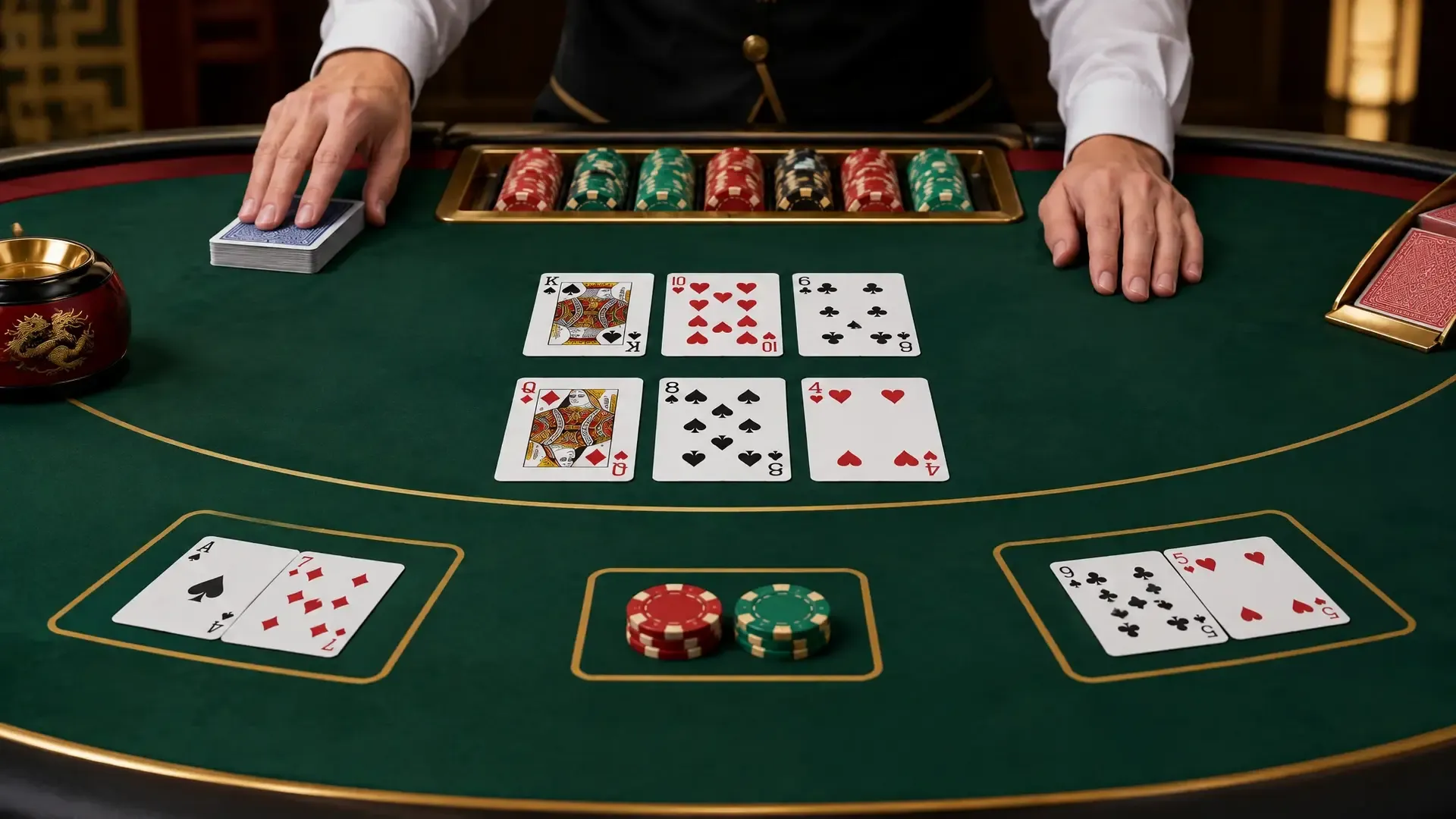
In Pai Gow Poker, the back hand, also called the high hand, contains five cards. The front hand, or low hand, contains two cards. In the usual comparison, your back hand must not be weaker than your front hand according to the applicable hand-ranking rules. The dealer then compares both of your hands with the corresponding dealer hands, with the result depending on how many hands you win and lose under the local rules.
If you are still learning the structure, it can help to review a guide on how to play Pai Gow before focusing on strategy. Hand-setting decisions make much more sense once the basic layout, dealing procedure and comparison process are familiar.
What a foul hand means
A foul hand is an arrangement that breaks the game's required relationship between the front and back hands. The most common example is placing a stronger hand in the front than in the back. Since the two-card front hand is supposed to be lower than the five-card back hand, an arrangement that violates this order may be declared fouled. The exact procedure and consequence can vary by venue or rule set, so always check the instructions at the table.
A foul hand is different from a strategically weak split. A legal arrangement may still be a poor choice because it gives away too much strength in one hand or fails to balance the two hands effectively. By contrast, a foul arrangement is illegal under the relevant setup, regardless of whether it might otherwise have been an attractive gamble. Checking legality must come before judging whether a split is strong.
Common wrong-split patterns
One frequent mistake is concentrating too much strength in the front hand. A player may see a useful pair or combination and place it in the two-card hand without first considering what this leaves for the back. Even when the layout is legal, the five-card hand may become unnecessarily weak. The opposite mistake is weakening the front hand so severely that the back is powerful but the overall arrangement has little balance.
Another error is choosing the first acceptable split. Seven cards can often be arranged in more than one legal way, and the most obvious arrangement is not automatically the best one for the particular rules or hand. Players also sometimes preserve an attractive-looking five-card combination while ignoring a better alternative that produces two competitive hands. There is no universal split that should be applied to every holding; the cards, house way and applicable procedures all matter.
For example, if several cards can form a strong five-card hand, do not automatically keep that combination intact. First ask what the two remaining cards create in the front. Then compare that layout with alternatives that slightly weaken the back while making the front more competitive. This is an illustration of the trade-off, not a fixed strategy rule. The correct decision depends on the full seven-card holding and the rules in force.
For terminology and ordering, consult the relevant Pai Gow hand rankings before making hand-setting decisions. Knowing whether a combination is legally and comparatively stronger prevents mistakes caused by relying on a familiar poker pattern that does not apply in the same way here.
A repeatable hand-setting process
A disciplined process is more useful than trying to memorize every possible combination. After receiving the cards, pause and identify the strongest available five-card hand. Next, examine the two cards that would remain and consider whether the arrangement is legal. Then look at other plausible splits rather than stopping at the first one that seems acceptable.
For each candidate, ask three questions: Is the back hand at least as strong as the front under the table's rule? Does the split leave one hand unnecessarily weak? Would a small change create a better balance without creating a foul hand? Once you have chosen, perform a final visual check before submitting or exposing the cards. This last pause catches swapped positions, overlooked pairs and accidental movement of a card.
The house way is the stated procedure used to set the dealer's hand, and it may differ from a player's preferred approach. A house way can include detailed decisions for particular combinations, so do not assume that an online description or another table's procedure applies everywhere. Read the posted or explained rules and ask the dealer to clarify an unfamiliar point. Understanding the house way helps you anticipate the dealer's process, but it does not make any single arrangement universally best for a player.
Side-bet pitfalls
Side bets are optional wagers separate from the main Pai Gow Poker hand. They can have different qualifying conditions, paytables and availability depending on the venue or game version. A large advertised payout does not mean that the bet improves your main-game decision, and it should never be treated as a way to repair a losing result.
The most common side-bet errors are failing to read the paytable, overlooking eligibility rules, confusing the side wager with the main wager and betting impulsively because a rare outcome has a prominent payout. Before placing one, confirm what hand or event qualifies, how the result is paid and whether the wager is settled independently from the main hand. If the terms are unclear, leave it out until you understand them.
Side bets also belong in a separate budget decision. They do not change how the seven cards should be arranged in the main game. Players who want a clearer picture of the underlying costs and settlement mechanics can read about Pai Gow odds and commission, while remembering that local rules and paytables control the actual details.
Table etiquette and procedural mistakes
Good table etiquette is practical, not performative. Wait for the betting window and the dealer's instructions before acting. Do not touch cards or chips in a way the table procedure prohibits, and avoid moving cards after the hand-setting process has begun. If you are unsure whether a card belongs in the front or back position, ask before the hand is finalized rather than trying to correct it afterward.
Questions are normal, especially when procedures differ between venues. Ask at an appropriate pause, listen to the explanation and confirm the local rule if the answer affects your hand. Avoid distracting players who are setting their cards, commenting on another person's decision or reaching across the layout. A calm pace protects your own decision-making and makes the process easier for everyone.
Final pre-play review
Before submitting a hand, use the same short review every time:
- Confirm which five cards are in the back and which two are in the front.
- Check that the back hand is not weaker than the front and that the arrangement is not foul.
- Compare the selected split with at least one reasonable legal alternative.
- Verify the table's house way, card procedure and any side-bet terms before relying on them.
- Ask the dealer for clarification if a rule or placement is unfamiliar.
FAQ
What is a foul hand?
It is an arrangement that violates the required relationship between the five-card back hand and the two-card front hand. Exact treatment can vary, so local rules control.
Can the dealer's house way be different?
Yes. The house way is the table's stated method for setting the dealer's cards, and procedures can differ. Read or ask about the applicable version rather than assuming every table uses the same approach.
Should beginners play side bets?
Beginners should not feel obliged to play them. First understand the main hand, then read the complete paytable and eligibility rules before deciding whether an optional wager fits a separate budget.
What should I do if I am unsure how to set my hand?
Pause and ask the dealer to explain the relevant procedure before finalizing the layout. Do not guess, copy another player or move cards after submission. Rules, terminology and procedures may differ, so check the specific game in front of you.
Pai Gow Poker rewards careful preparation more than rushed action, but no hand-setting method guarantees a win or removes the house advantage. Play only if you are 18 or older, set a budget in advance and do not chase losses or treat gambling as a source of income.
Gambling is for adults aged 18+ only (or older where local law requires). Play responsibly: set a budget and time limit in advance, treat gambling as entertainment rather than a way to make money, and contact a local support organisation if gambling stops being fun.